
Introduction.#
Brickwork construction techniques haven’t changed significantly in perhaps a thousand years. Yes, the materials have changed, but the basic principles of building with bricks haven’t. The knowledge is well documented, and few examples demonstrate this better than the brickwork arch. So the massive AI training data centres have almost certainly absorbed knowledge from books and digital sources. Whether you call that learning from existing knowledge or ‘stealing’ it is another question.
With that in mind, it seemed a relatively simple task for me, as a fully qualified bricklayer and knowledgeable AI ‘director’, to create my own software to revolutionise the design and creation of brick arches on a construction site.
You could create something like this yourself, but I reckon you’d need a rather unusual combination of skills. You’d need to understand Blender, FabexCNC, LinuxCNC and advanced brickwork, so you could write effective prompts, recognise errors and steer the AI towards a working solution.
The Software#
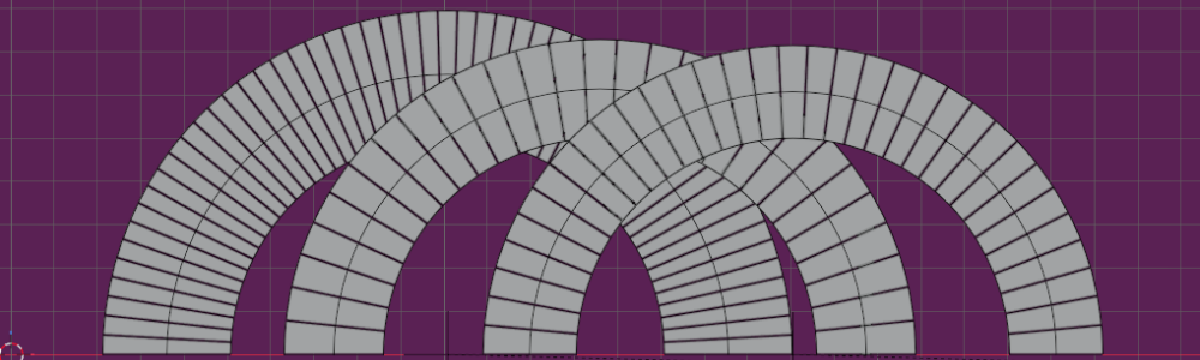
I created A Blender plugin that generates a multitude of brick arches. Including;
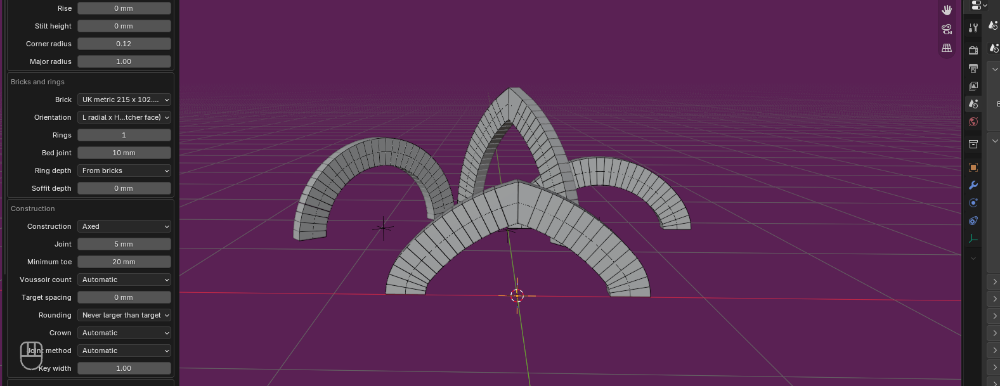
- Semicircular Arch - A roman style simple curved Arch.
- Segmental Arch - 1/6th of a segment of a circle is used to create the former.
- Gothic Equilateral - A Gothic arch found commonly in churches.
- Lacent Arch - A variation on the Gothic arch.
- Drop Gothic Arch - A blunt version of the Gothic arch.
- Three Centred Arch - Instead of the radius drawn from 2 centers the radius is drawn from three centers.
- Four Centred Arch - A classic Tudor style Arch.
- Five Centred Arch - This creates a smooth curve with bull nosed ends.
- Flat Arch/ Jack Arch - A classic arch found in many northern town houses. usually made from rubbing bricks.
This plugin is fantastic, not only does it do these arch types, it has many other features;
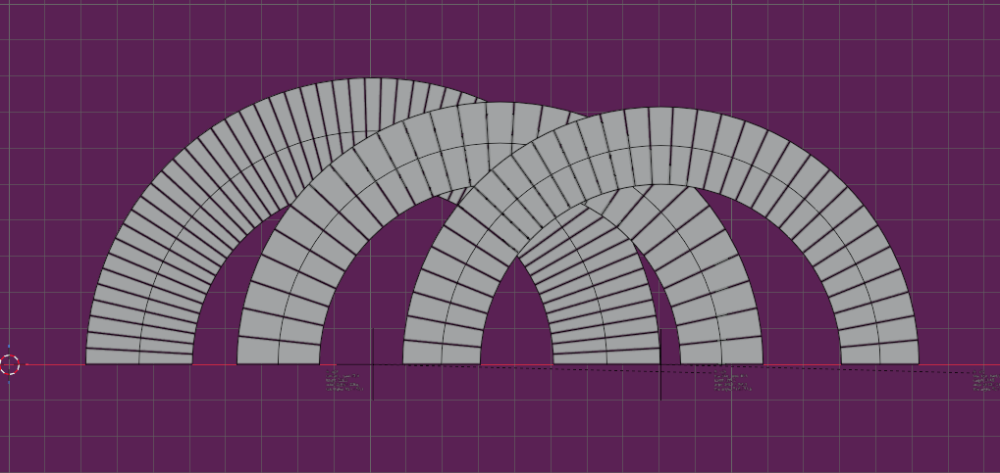
Generated accurate arch model incorporating different brick sizes, such as British, German and American sizes.
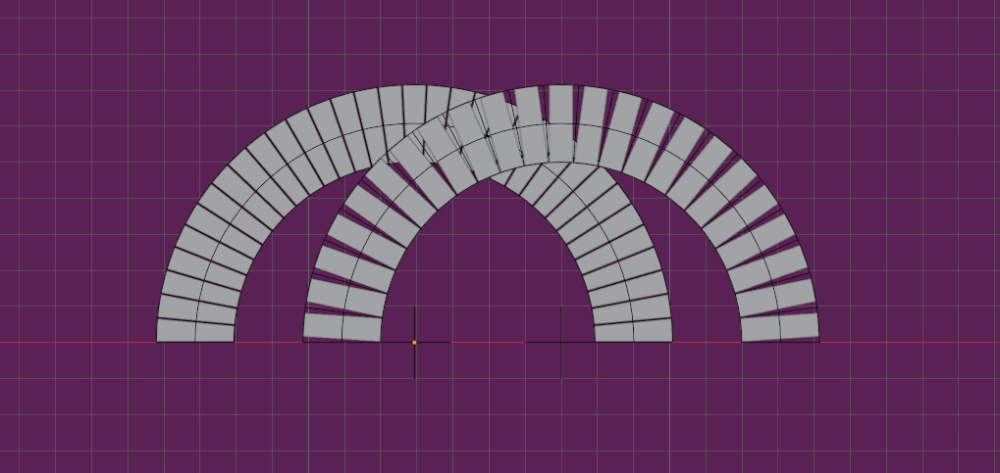
Various Construction Modes Including, Axed and Rough Ring.
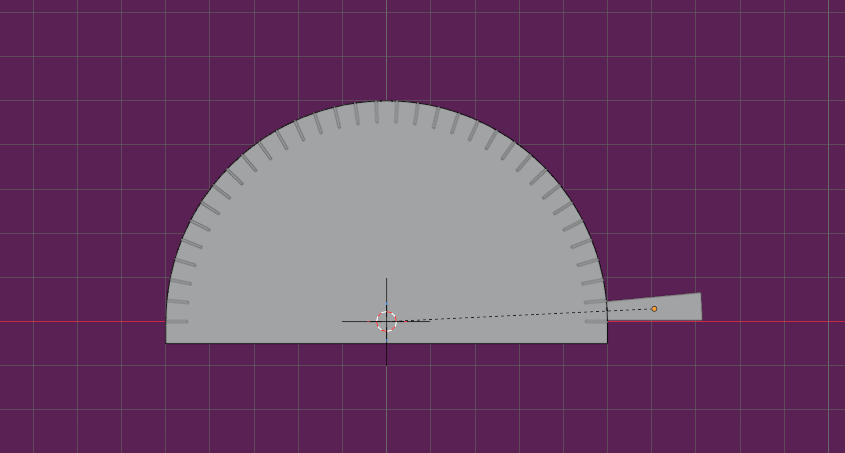
Options to show only the former and coursing guides. Excellent for CNC machining and real world construction.
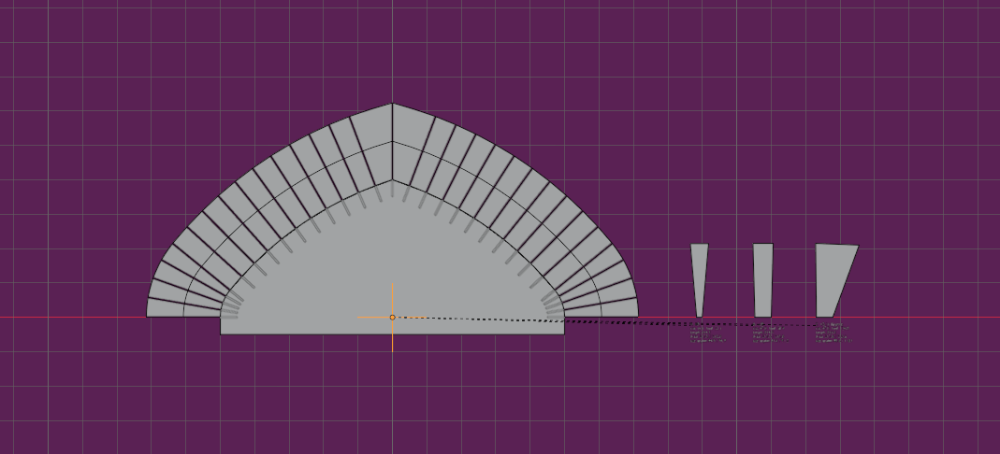
Lastly It generates cutting templates for bricks. Only creating ones that are not copy’s of others.
Conclusion#
So, have I revolutionised brick arch construction? Perhaps that’s an over reach, but I have revolutionised the process for my own purposes.
What I have done is create a tool that brings together traditional brickwork knowledge, parametric modeling and optimised it for CNC-assisted making. Instead of drawing an arch and working out every brick individually, I can generate a model, adjust it’s dimensions, examine the voussoirs and produce a schedule of the bricks and cutting templates required.
The interesting part isn’t simply that AI helped me write a Blender plugin. It’s that I could use my experience as a bricklayer to guide the development, know when the results weren’t right and keep refining the software until it did something correctly that I required it to do.
For me, this is where the potential lies. Combining practical trade skills with open-source software could give craftspeople access to tools that would previously have been expensive, difficult to develop or simply unavailable.
The result is a Blender plugin, built around my own open-source workflow, that I can continue to develop for my own projects.
Not bad for a bit of code and a lifetime of knowing how bricks fit together.
If you've enjoyed this article and fancy helping keep the servers humming and the tools running, you can find things on the Robin's Lab wishlist . No obligation — reading, sharing, enjoying the articles and disagreeing with me are all completely free. I won't even send you an invoice.